

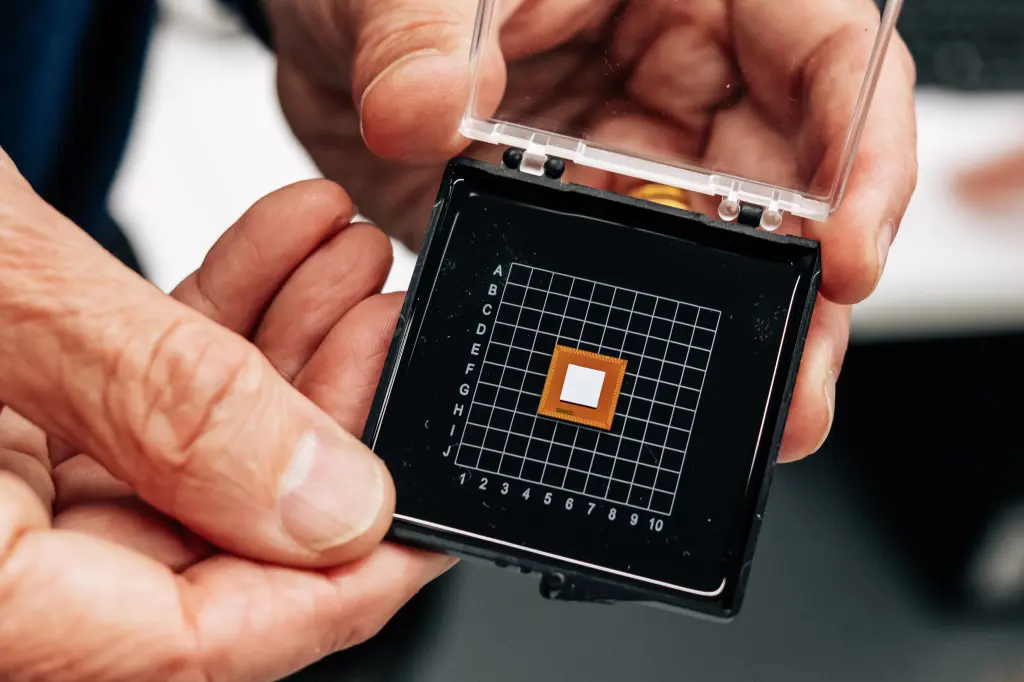
A groundbreaking development in quantum computing has enabled researchers to miniaturize quantum processors to the size of a fingernail, potentially transforming the field of computing. Quantum computers, which traditionally require massive, highly controlled environments, are now being designed as compact, portable chips. This miniaturization could make quantum technology more accessible and versatile, opening doors for widespread applications in scientific research, artificial intelligence, and cybersecurity. Shrinking quantum hardware also promises improvements in energy efficiency and integration into devices previously limited to classical computing. This breakthrough marks a significant milestone in the evolution of quantum computing, bringing us closer to practical, everyday quantum-enabled devices.
What Is Quantum Computing?
Quantum computing is a revolutionary approach to processing information that leverages the principles of quantum mechanics. Unlike classical computers, which use bits as 0s or 1s, quantum computers use qubits, which can exist in multiple states simultaneously thanks to superposition. Qubits also exhibit entanglement, enabling complex operations across distant qubits instantly. These properties allow quantum computers to solve certain problems exponentially faster than classical systems, including factoring large numbers, simulating molecular structures, and optimizing complex systems.
Quantum computing is particularly transformative for AI, cryptography, logistics, and scientific simulations, where traditional computers struggle with computational limits. However, building stable quantum systems is extremely challenging, requiring precise control, low temperatures, and error correction. Miniaturization efforts aim to maintain these quantum properties while reducing the size and complexity of the hardware, making quantum computing more practical and deployable in real-world applications.
The Breakthrough: Fingernail-Sized Quantum Chips
Researchers have successfully created fingernail-sized quantum chips, representing a major leap in hardware miniaturization. These chips condense the complex quantum processor architecture into a tiny footprint while maintaining qubit functionality. Key enabling technologies include advanced semiconductor fabrication techniques, superconducting qubits, and cryogenic-compatible materials that allow stability at reduced scales. Previously, quantum systems often occupied entire rooms with large dilution refrigerators; now, these compact chips drastically reduce physical space requirements.
The miniaturization also facilitates integration with other devices and electronics, opening opportunities for hybrid classical-quantum systems. By shrinking the size, engineers can increase the density of qubits, potentially improving computational power without significantly increasing energy or cooling demands. This achievement not only demonstrates engineering excellence but also signals the transition of quantum computing from experimental laboratory setups toward scalable, real-world deployment.
Advantages of Miniaturized Quantum Chips
Miniaturized quantum chips offer several transformative advantages over traditional large-scale quantum computers. Portability allows these processors to be integrated into smaller devices or experimental setups outside specialized labs, enabling broader adoption. Scalability improves, as smaller chips can be manufactured more efficiently, potentially allowing multi-chip systems to work in parallel for greater computing power. Reduced size also brings energy efficiency, with lower cooling requirements and less electrical consumption compared to room-sized quantum systems. Compact chips allow for faster data transfer within integrated devices and can facilitate real-time AI computations.
Moreover, they simplify deployment in environments such as data centers or scientific instruments. By maintaining high-performance qubits while shrinking hardware, miniaturized quantum chips offer a balance of power, accessibility, and practicality. This combination could accelerate breakthroughs in machine learning, cryptography, molecular simulations, and other quantum-sensitive applications.
Applications and Use Cases
Fingernail-sized quantum chips open up exciting possibilities across multiple sectors. In scientific research, they enable faster simulations of complex molecules, chemical reactions, and physical systems, potentially accelerating discoveries in medicine and materials science. Artificial intelligence and machine learning can leverage quantum speedups for optimization and pattern recognition tasks, improving efficiency and capabilities. In cryptography and cybersecurity, quantum chips provide tools for testing secure encryption and potentially developing quantum-resistant protocols. Miniaturized chips also allow integration into consumer electronics, such as portable AI devices or advanced sensors, extending quantum computing beyond laboratories.
Industrial applications include logistics, financial modeling, and energy optimization, where quantum algorithms outperform classical methods. By making quantum computing more compact and deployable, these chips enable widespread experimentation and implementation, turning previously theoretical applications into practical tools for research, business, and technology innovation.
Challenges in Quantum Miniaturization
Miniaturizing quantum computing introduces significant technical challenges. One major issue is maintaining qubit stability and coherence in smaller chips, as environmental noise and thermal fluctuations can easily disrupt quantum states. Ensuring accurate error correction becomes more difficult when hardware is compact. Fabricating chips with extremely dense qubit arrays requires advanced nanofabrication techniques, which are costly and complex. Cooling remains a critical concern, as many quantum processors need cryogenic temperatures even in miniaturized form.
Another challenge is integration with classical electronics, requiring precise interfaces to maintain quantum performance. Manufacturing consistency and scalability are also hurdles, as defects at the nanoscale can compromise functionality. Finally, high costs and specialized expertise limit widespread deployment. Overcoming these challenges requires continuous innovation in materials science, engineering, and quantum software to make miniaturized quantum chips both reliable and commercially viable.
Comparison With Existing Quantum Systems
Fingernail-sized quantum chips differ significantly from traditional quantum computers. While large-scale systems offer high qubit counts and experimental control, they require entire rooms, specialized cooling, and extensive infrastructure. In contrast, miniaturized chips dramatically reduce physical size, allowing easier integration into devices or laboratory setups. Performance-wise, these small chips may initially have fewer qubits or slightly higher error rates, but advanced design compensates with efficient layouts and optimized algorithms.
Compared to prototypes like IBM’s or Google’s room-sized quantum processors, miniaturized chips are far more portable and accessible, enabling broader experimentation and practical applications. The trade-offs include lower maximum qubit counts and potential stability challenges, but advantages such as energy efficiency, scalability, and hybrid integration with classical electronics provide compelling benefits. Overall, miniaturized quantum chips represent a step toward commercial deployment, bridging the gap between experimental systems and usable, real-world quantum technology.
Future of Quantum Computing
The future of quantum computing lies in scalability, accessibility, and integration. Miniaturized quantum chips are a critical milestone in moving from laboratory experiments to practical, deployable technology. Researchers aim to increase qubit counts while maintaining coherence, enabling more powerful computations. Integration with classical computing systems could create hybrid platforms, leveraging quantum speedups where needed while retaining classical efficiency. Commercial applications will expand, from pharmaceuticals and materials research to AI, logistics, and finance.
As manufacturing techniques improve, costs are expected to decrease, allowing wider adoption. Portable quantum chips could be embedded into scientific instruments, edge computing devices, or even consumer electronics, making quantum technology part of everyday life. This evolution also requires advances in software, error correction, and algorithm design to fully utilize the hardware. The miniaturization trend signals a future where quantum computing becomes ubiquitous, efficient, and integral to global technological progress.
Conclusion
Miniaturizing quantum computing to fingernail-sized chips represents a monumental step toward practical, widely accessible quantum technology. These compact processors promise portability, energy efficiency, and potential integration into a variety of devices and applications. While challenges such as qubit stability, error correction, and manufacturing remain, the breakthrough paves the way for new scientific discoveries, AI advancements, and enhanced cybersecurity. By shrinking the size of quantum systems without sacrificing functionality, researchers are bringing the dream of real-world quantum computing closer to reality.
FAQs
What does miniaturizing quantum computing to fingernail-sized chips mean?
Miniaturizing quantum computing means reducing the physical size of quantum processors to a scale small enough to fit on a fingernail. These chips maintain qubit functionality and quantum properties while making the hardware portable and more practical for real-world applications.
What are the advantages of smaller quantum computers?
Smaller quantum computers are more portable, energy-efficient, and scalable. They can be integrated into devices more easily, require less cooling infrastructure, and enable faster experimentation and deployment compared to large, room-sized quantum systems.
How do miniaturized quantum chips impact artificial intelligence and machine learning?
Quantum chips accelerate AI and machine learning by performing complex calculations and optimizations faster than classical computers. Miniaturized chips make it easier to integrate quantum acceleration into AI workflows, potentially improving efficiency and capabilities for real-world applications.